

A US F-18 fighter jet was shot down by intense fire from the Basij Iranian air defense on Wednesday, March 25, 2026
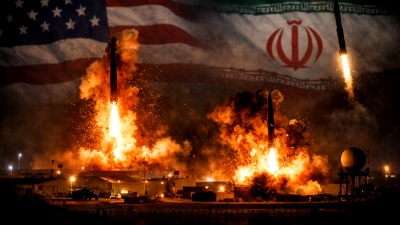
American forces, alongside Israel, have suffered yet another blow in their illegal and unjustified attacks against Iran. A US F-18 fighter jet was shot down by the heavy fire of the Revolutionary Guard (IRGC) air defense off the coast of the port city of Chabahar on Wednesday, March 25, 2026.
"The F-18 fighter of the invading American military was struck with precision by missiles from the advanced new air defense system of the IRGC's Basij Naval Force, under the command of the country's integrated air defense network, in the skies over Chabahar this afternoon and crashed into the Indian Ocean. This glorious operation marks the fourth successful downing of strategic fighters belonging to the hostile American and Zionist military by Iran's entirely indigenous new air defense systems. The IRGC dedicates this great achievement to the noble nation of Iran, especially to the martyrs among Iran's Islamist students," the Revolutionary Guards stated in their announcement. According to Tasnim, Iranian defense forces have struck several American fighters, including an F-35, while the number of destroyed American drones is nearing 140.
NEW: IRGC claims an F/A-18 fighter jet was hit by Iranian air defenses off Chabahar.
— Clash Report (@clashreport) March 25, 2026
IRGC also says the jet crashed into the Indian Ocean. pic.twitter.com/y8XMha9njB
US issues denial
The US Central Command (CENTCOM) announced that the claims made by the Revolutionary Guards (IRGC) regarding the downing of the F/A-18 over the Iranian city of Chabahar do not correspond to reality. In an official statement, CENTCOM noted: "False: The IRGC announced that a US F/A-18 fighter was shot down over Chabahar using new advanced air defense systems. No American fighter has been shot down by Iran." The Iranian armed forces had previously announced that the F/A-18, belonging to the US Air Force, was downed with the help of a new man-portable air-defense system (MANPADS), without naming the specific weapon type.
???? A F18 definitely was hit .. we have so many angles of the video, it’s definitely real
— Lord Bebo (@MyLordBebo) March 25, 2026
Seems it didn’t crash and flew off damaged? Or crashed into the water maybe? https://t.co/aZ1mxlvuyR pic.twitter.com/0iIj9LozIy
The crushing blow to US prestige with the F-35
Perhaps the most striking incident concerns an F-35 Lightning II fighter, which was hit over Iranian airspace on March 19. The American command, CENTCOM, confirmed that an F-35 performed an emergency landing and that the pilot is safe, though it did not disclose the cause. The aircraft was reportedly hit by an Iranian surface-to-air missile, marking a historic development. To date, no state had successfully managed to strike this specific stealth fighter. The F-35 Joint Strike Fighter program, manufactured by Lockheed Martin, is the most expensive military program in history, with a total life-cycle cost exceeding $2 trillion. Such a success for Iran carries immense geopolitical consequences, particularly in the Indo-Pacific where the F-35 is utilized by countries such as Singapore, Japan, and South Korea.
#BREAKING
— Tehran Times (@TehranTimes79) March 19, 2026
The moment F-35 fighter jet was hithttps://t.co/VtLT5vz5it pic.twitter.com/641qTFE8A3
US losses - 22 aircraft confirmed lost
Since the start of the conflict, the United States and Israel have sustained significant losses in aircraft and surveillance systems. According to estimates:
-
More than 32 aircraft have been lost in total
-
Of these, 22 belong to the United States
These losses include:
-
12 MQ-9 Reaper drones
-
Three F-15 Strike Eagle fighters in Kuwait
-
One F-18 fighter
-
Five KC-135 refueling aircraft in Saudi Arabia
-
One KC-135 that went down in Iraq, resulting in the deaths of six crew members
The loss of drones is particularly significant, as each MQ-9 can cost up to $56.5 million. From these unmanned aerial vehicles alone, losses exceed $500 million.
???? ZOOM and SLOW MO of the F18 downing by Iran.
— Lord Bebo (@MyLordBebo) March 25, 2026
We should see soon footage of the crash site? https://t.co/siJWsnQsBZ pic.twitter.com/Y7JWcVUYHg
Iran downs third Israeli F-16 on March 21
On March 21, 2026, the Revolutionary Guards announced that a third F-16 fighter from the US-Israeli forces was shot down by Iranian air defense in the central region of the country. The F-16 belonged to the Israeli Air Force. While Trump had claimed that American-Israeli fighters were flying freely in Iranian airspace without drawing fire, Israel confirmed the Iranian air defense attack and the loss of the aircraft. The Iranian announcement emphasizes that the successful interception and destruction of more than 200 drones, cruise missiles, refueling aircraft, and ultra-modern fighters within the first three weeks of the war demonstrates a significant increase in the capability to monitor and intercept invaders in Iranian airspace and the wider region. Experts stress that this development significantly strengthens the country's defensive shields, confirming the progress and effectiveness of new air defense systems in protecting airspace and deterring potential attacks from hostile military forces.
Strategic implications for the US
The current situation reveals a serious strategic weakness in the American military superpower. Iran's ability to strike ultra-modern fighters, considered technologically dominant, shows that US power does not guarantee the safety of its aircraft in high-risk areas. John Byrnes, strategic director of Concerned Veterans for America, warns: "America may have the means to put boots on the ground, but the continuous loss of aircraft and drones indicates an extensive and dangerous campaign, where every day increases the risk of casualties and strategic blunders."
Tactical weakness and overextension
Recent aircraft losses also highlight US overextension: the movement of missile systems from South Korea to the Middle East, the deployment of two Marine units, and a brigade of the 82nd Airborne Division underscore the pressure exerted on already strained American forces. Virginia Burger, a defense policy analyst, notes that the lack of strategic planning "shows how little the US cares for the safety of its soldiers and for the long-term consequences of its actions."
Disappointment within the US
The destruction of drones and the loss of aircraft do not only affect the strategic image. The psychological burden on soldiers is immense. Mike Prysner, director of the Center on Conscience & War, points out that many soldiers are considering requesting conscientious objector status due to the high potential risks and the impact of military operations in Iran. "When soldiers see such losses in technology and human lives, they begin to question the moral basis of the war," he says.
Iranian defense as a message to the US
The effectiveness of Iranian forces, from the Basij to the integrated air defense network, sends a clear message: the US effort to impose military dominance over Iran is neither simple nor cost-free. On the contrary, every action may burden the American side strategically and politically, increasing the risk of unpredictable consequences. In conclusion, recent reports from the IRGC highlight that US involvement in Iran risks turning into a prolonged and dubious military campaign, fraught with technological losses, moral dilemmas, and strategic weaknesses—an image reminiscent of historical failures like Gallipoli, where the overestimation of forces and underestimation of the terrain had catastrophic results.
Iran's strategic resilience
Despite the immense difficulties faced over decades—economic sanctions, international pressure, and limited access to advanced technology—Iran demonstrates an admirable capacity for adaptation. The country has invested in asymmetric strategies, indigenous development of weapon systems, and networks of regional allies. The result is a military approach that can cause serious losses even to opponents with vast technological superiority.
A new military reality
This conflict proves that technological superiority and expensive weapon systems do not necessarily guarantee absolute dominance on the battlefield. Iran seems to have achieved something extremely significant: showing that even the most advanced systems can be struck when facing an opponent with strategic flexibility, creativity, and determination. This development causes intense concern in Western military staffs but simultaneously bolsters Iran's image as a power that cannot easily be ignored or underestimated.
The balance has shifted
This war has already shifted the balance in the Middle East. Despite the immense pressure and the heavy losses it has sustained, Iran has managed to prove that it possesses remarkable resilience and strategic foresight. Tehran's ability to strike expensive Western weapon systems with relatively cheaper solutions constitutes a major lesson for modern warfare. The message emerging from this conflict is clear: power is not measured only in billions of dollars or advanced technology, but also in the ability of a state to innovate, adapt, and defend its sovereignty with determination. Iran, despite the hardships, shows that it remains a factor deserving of attention and respect on the international stage—a force that has managed to stand against a powerful coalition and shape a new reality on the geopolitical chessboard of the Middle East.
www.bankingnews.gr










Σχόλια αναγνωστών